
Trail Talk – November 2026
AS A BIT OF A DIVERSION to a walk in the woods during these autumn months, this is a good time to visit some of the “golden times” of our local trails that have little to do with those carpets of big-leaf maple leaves that delight us each year during this season. Perhaps a little gold fever of the metallic you ask? Maybe an explanation of some of those strange landforms tucked away into our surrounding wild areas?
As trail folks, we’re always curious about this or that trail. Where does this trail lead? If I follow that trail, what new and unusual experiences await me? Well, consider the early European visitors to this land. Following trails used by First Nations peoples for millennia, these explorers (almost exclusively men in that era of European/American history) came into what is now called our Klamath Region.
As mule trains traversed the “California Oregon Trail” bringing food from the newly established farms of the Willamette Valley to hungry California miners, and returned with household implements to sell along the return trip, it was perhaps inevitable that gold-bearing streams would be discovered at overnight camps.
Yreka was first in May 1851, followed shortly on Josephine Creek in the Illinois Valley. And later that same year, Table Rock City, later to become Jacksonville, was established on yet another gold discovery. Soon, the entire Klamath Region bustled with prospectors, following ancient trails up and down watersheds, made other discoveries, and established new settlements.
Those remnant trails and industrial development have become the basis of many of our local trails today. In the Woodlands, hike Petard Ditch Trail and consider the effort to move water from Jackson Creek to Daisy Creek, which flows eventually into Griffin Creek. Or the Sterling Ditch Trail bringing water from Little Applegate River to the massive diggings on Sterling Creek. In Forest Park, a whole series of ditches moved water to the site of hydraulic mining: Ol’ Miners’, Ditch, Boulder, Owl Hoot, and China Ditch Trails all follow these old diversions.
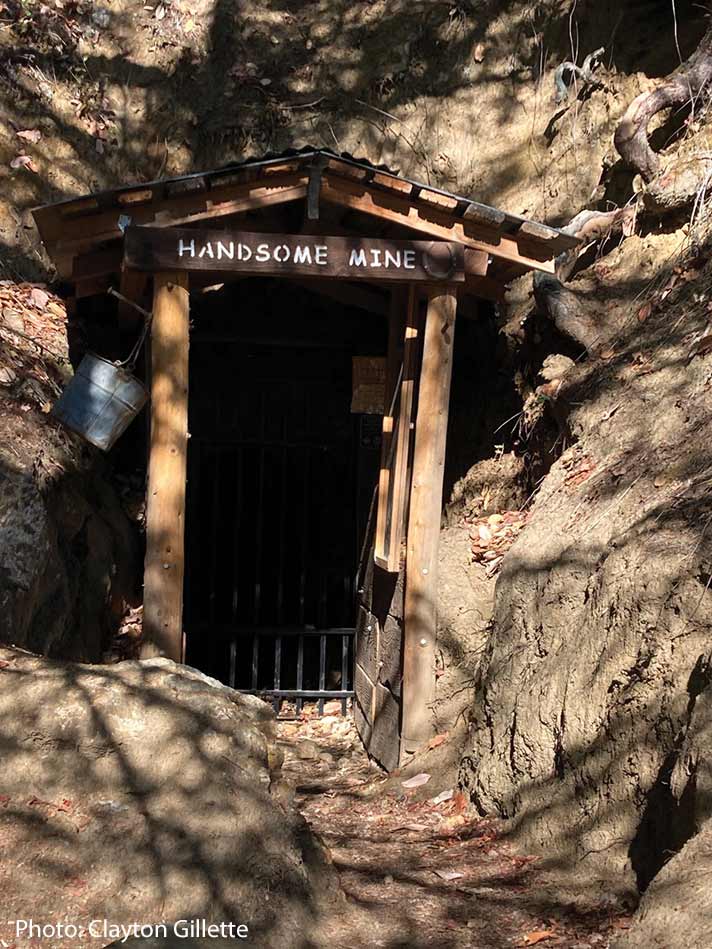
Hard rock mining, with its adits and tunnels and mineshafts followed the easy (hah! cold, wet, miserable work) pickings of placer mining. A series of adits and tunnels, many collapsed or forgotten, are found near Ol’ Miners’ and Ditch Trails in the old M. Town claims in Forest Park. Much of this work commenced in the 1860s and a “permanent” mining camp was occupied near the intersection of Ditch and Boulder Trails just south of P2 Parking Area. Many shallow excavations dot the hillside but visitors’ real treasure is found at the Handsome Mine on Ol’ Miners’ Trail with its replica adit and barred entrance, where one can gaze into its depths.
 Trail Talk is a monthly column by Clayton Gillette about hiking the Jacksonville Woodlands trail system. For more information, please visit the Jacksonville Woodlands Association website at
Leave A Comment