
Trail Talk – February 2026
AS TRAIL PEOPLE, we are wont to point out that trails are as organic as the hillsides and canyons they traverse, climb, descend, and generally meander through. No more permanent in the great scheme of things, ephemeral as mayflies, it may seem, but a lifeline for critters traveling to and fro on their daily rounds. From the oft-missed track back and forth between burrow, food, and water of the tiny shrews and voles, to the wide “garden tiller” freeways of elk herds moving through dense forested canopies, these trails surround us. The endless pacing of cattle along the confining fences of pastureland creates these semi-permanent paths; but a few years of bovine diaspora, and the evidence of their passing fades into the grasslands.
We’ve spoken before of Coyote, in the beginning, showing the other animals where to walk. These game trails became the trading routes of our First Nations, which became the wagon roads of our city builders. And even though these roads and highways appeared to be a permanent fixture on the land, most travelers are aware of adjustments to these routes where abandoned sections of once heavily traveled byways soon faded into the surrounding landscape. In our region, many roads that were constructed for resource extraction, simply became ghosts of previous industry.
And this brings us to the point of this essay: trails, once constructed, must be maintained. Our local trail systems, from the trails of Jacksonville to the Applegate Valley, Siskiyou Mountains, nearby Cascades, and municipal byways from Ashland to Grants Pass, all need looking after. Volunteer groups generally undertake this task, often under the watchful eye of the governing landowner, be they federal, state, or local. Crews are trained to uphold trail standards of safety, integrity, and convenience of travel. On Jacksonville trails, maintenance occurs year-round, generally confined to tread maintenance for width and grade, pruning back of brush, noxious weed control, downed tree removal, and erosion control.
When using the trails, visitors, being they hikers or bikers, must be cognizant of trail courtesy and behavior. (Must we once again remind folks of “No Littering”—this includes poop bags from dog walkers, Gu packets and energy drink cans from mountain bikers.) On a larger scale, other concerns become paramount. On designated hiking-only trails (not limited mobility compatible), logs are often left in place that are a simple step-over. These low barriers were left purposefully to discourage unauthorized bicycle use on these pedestrian-friendly byways. Please leave them in place. Other obstacles that impede travelers will be removed by trail crews.
Bikers: if a trail has been re-aligned or re-routed to address an erosion hazard, do not remove brush or trees placed to eliminate the problem area. This includes logs and rocks placed in reversals (switchbacks); the soils on our hillsides are prone to sloughing in wet seasons, thereby creating erosion gullies which destroy the integrity of the trail.
Remember, these trails belong to all of us. If you see someone damaging trails, speak up. Let our legacy be well-respected woodland areas for future generations to enjoy.
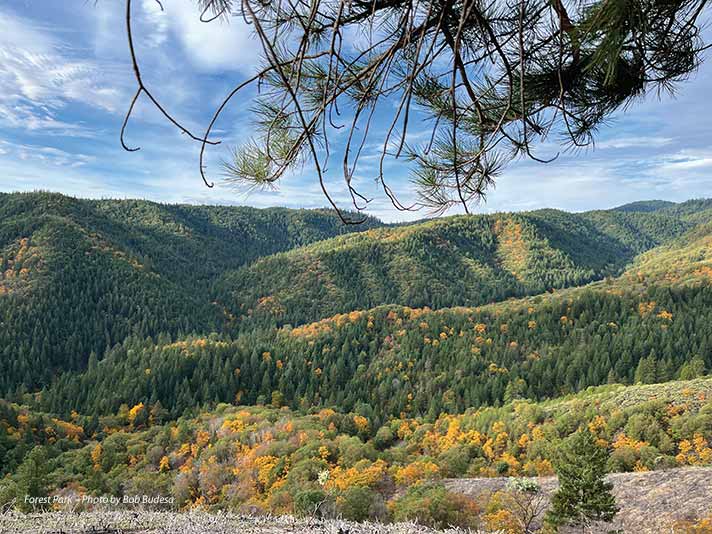
Featured image: Forest Park – Photo by Bob Budesa
 Trail Talk is a monthly column by Clayton Gillette about hiking the Jacksonville Woodlands trail system. For more information, please visit the Jacksonville Woodlands Association website at