
Trail Talk – September 2026
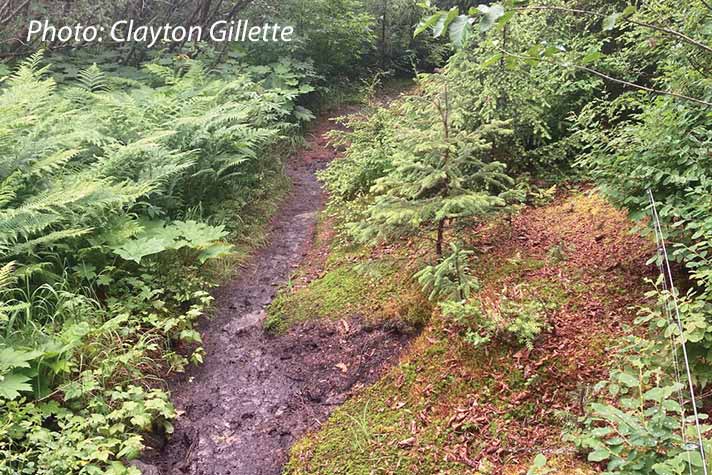
AND THERE WE WERE, knee-deep in bear and moose scat, mixed into the soft shale where the swollen stream ran underfoot. For some reason, this section of the legendary Iditarod Trail wasn’t as romantic as the books had made it out to be. Black spruce and birch roots, exposed by the erosion of countless footfalls and seasonally overflowing streams made the going treacherous. But the reward! Chest high, heavily laden thimbleberry, blueberry, and wild raspberry brush, though soaking us to the skin, yielded fruit to keep our souls warm on this trek to another of the North Country’s fabled Arctic grayling sanctuaries.
And like so many of the mythical and legendary trails of yore: The Santa Fe, The Oregon/California, El Camino Real de Tierra Adentro, it wasn’t just a single path, but a web of paths heading in a general direction. Travelers made real-time decisions to negotiate one pass or another, one side of the lake or river or the other… decisions made depending on conditions at the time. It seems inefficient in our present culture of defined roadways heavily impacting the environments they inhabit, permanent fixtures on the landscape.
Our travel to the regions where we encountered remnants of the fabled Iditarod Trail had been along another highway laid out over a series of ancient trading routes, more recent gold-fever paths, and militarily- expedient travel, the famous (or notorious, due to the toll it takes on vehicles) ALCAN (Alaska) Highway. When Japanese forces threatened the resource rich lands of Alaska and Yukon after the attack on Pearl Harbor, the US and Canada swung into gear, with the US Army Corps of Engineers creating a military road from oil-rich Alberta, through the Northern Rockies of British Columbia, across the tundra of Yukon Territory and into Alaska, where connecting routes provided access to ports on the Bering Sea and Gulf of Alaska. Millions of dollars, tens of thousands of men, thousands of trucks and other machinery, utilizing trade routes where possible, cutting through wilderness where necessary. 1422 miles. And all in seven months. (Though many sections were impassable to non-military vehicles.)
The legacy of that rushed, and often expedient, road building endeavor is a highway in flux. Original grades have been abandoned, resulting in often shorter segments more friendly to the capabilities of 21st century travelers. Segments transgressing First Nations territory have been rerouted as well. And bypasses were built where the original highway became the Main Street in many towns. So, what was once a single thread has become a web.
It’s important that we remember what came before; that we honor the endeavors of travelers from times past. Our Interstate 5 mainly follows the Oregon-California Trail corridor, which followed trade routes thousands of years old. Indians tell of Coyote teaching the animals where to walk, who later taught mankind. Many cultures attribute that role to Raven. These stories are important to remember our heritage. In the (edited words of a Salishan elder, “How can we have reconciliation when our culture and stories have been taken from us? We must remember who we were before.”
 Trail Talk is a monthly column by Clayton Gillette about hiking the Jacksonville Woodlands trail system. For more information, please visit the Jacksonville Woodlands Association website at