
Discovering Southern Oregon – November 2026
AMID GLOBAL STORIES of environmental decline, pollution, and ecosystem disruption, the revival of the Klamath River offers a remarkable story of resilience and renewal.
Once one of the West Coast’s most important salmon-producing rivers, the Klamath suffered a dramatic ecological decline after hydroelectric dams were constructed along its course, beginning in 1918. The four dams blocked salmon from reaching their traditional spawning grounds in the cool mountain streams upstream. Before the dams, the Klamath was a thriving ecosystem, supporting millions of migrating birds and sustaining Native American tribes, including the Hoopa, Karuk, Klamath, Shasta, Modoc, and Yurok. For thousands of years, the river provided these communities with both nourishment and a deep spiritual connection to the land and water.
After the dams were built, populations of Chinook salmon, steelhead, coho salmon, trout, and Pacific lamprey declined dramatically, with some species facing the threat of extinction. The Klamath Tribes in the upper basin lost access to their traditional salmon fishery for nearly a century. For the Yurok Tribe, often known as the “salmon people,” the decline became so severe that Alaskan salmon had to be brought in for their annual Salmon Festival—a celebration traditionally centered on the fall return of Chinook salmon to the Klamath River.
After decades of advocacy and collaboration among Native American tribes, conservationists, and other partners, the effort to restore the river finally succeeded. On October 2, 2024, the largest dam-removal project in U.S. history was completed, dismantling all four dams and reopening hundreds of miles of river habitat across Southern Oregon and Northern California. The achievement marked a historic milestone for the region’s tribes, the environment, and the salmon that once thrived in these waters.
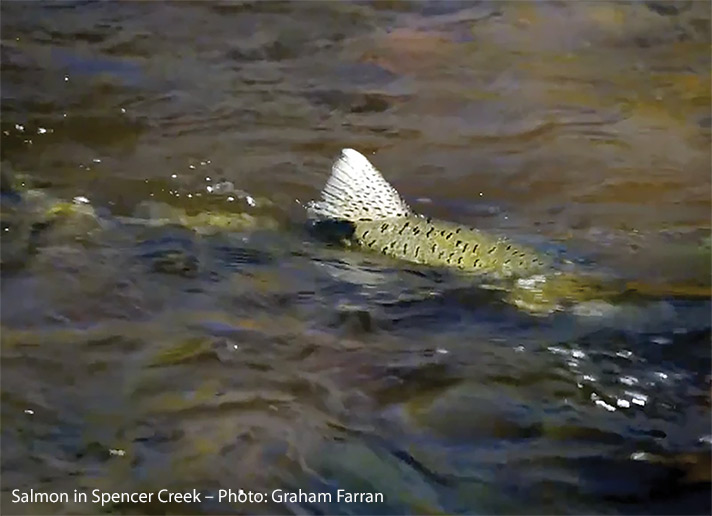
The river’s recovery has been remarkable. Within weeks of the dams’ removal, salmon began returning to spawning grounds that had been inaccessible for more than a century. Scientists estimated that 7,742 Chinook salmon migrated upstream in 2024, followed by approximately 13,310 in 2025. Salmon have begun recolonizing much of their historical range, reaching all the way to Spencer Creek in Oregon and other newly-accessible tributaries.
The salmon are returning and so are the outfitters offering a variety of rafting excursions. As the river returns to a more natural state, rafting outfitters are once again offering trips that showcase the Klamath’s rugged beauty, diverse landscapes, and exciting whitewater. Southern Oregon companies such as Noah’s River Adventures, Indigo Creek Outfitters, and Momentum River Expeditions offer guided excursions ranging from half-day and full-day outings to multiday adventures.
Depending on the section and conditions, rafters can experience everything from gentler Class II rapids to challenging Class IV and V whitewater. These trips offer an exhilarating way to explore the revitalized river while witnessing firsthand the landscape and ecosystem emerging after dam removal.
For another perspective on the river’s transformation, visit Spencer Creek, where it meets the newly-restored Klamath River near the former J.C. Boyle reservoir. Here, visitors can see where the river is reclaiming its natural course. Visitors will experience giant Chinook salmon slowly making their way upstream in search of ideal spawning spots. This is a remarkable experience, standing at the bottom of a former lakebed, watching hundreds of Salmon reach a stream that they have been blocked from for over 100 years.
In addition to restoring the river, over 2,000 acres of previously-submerged lands are being restored by Native tribes, who have propagated more than 66,000 pounds of native seeds, including wheatgrass, yarrow, lupine, and oak trees, to rejuvenate the ecosystem.
The Klamath River’s return to its wild state offers hope for a sustainable future, proving that with persistence and partnership, ecosystems can be restored, and life can thrive once again. This is not just a victory for the river but a testament to what’s possible when science, tradition, and community come together to heal the environment.
Footnote—Spencer Creek is 50 Miles from Jacksonville. Take Dead Indian Memorial Road and turn right onto Clover Creek Road. Travel 5.8 miles to Spencer Creek where you will see a parking lot and small park. Follow Spencer Creek south and you’ll reach the old J.C. Boyle lake basin, which is now the Klamath River.
Leave A Comment