
On Real Estate & More – November 2025
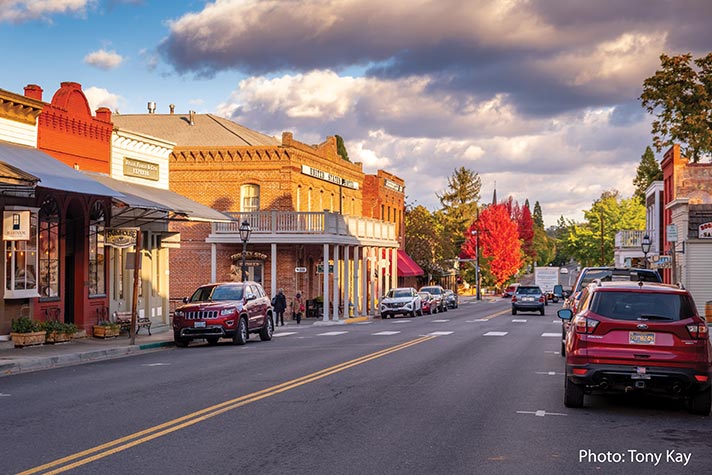
JACKSONVILLE’S DOWNTOWN is special because it feels alive. People stroll along California Street and see shops, cafés, and restaurants through big windows. The historic buildings are charming, but what makes them vibrant is what’s happening at street level.
The City already protects its historic architecture through zoning rules, design guidelines, and the Historic Preservation Commission. But those tools mostly focus on how buildings look, not what fills the space behind the glass. To make sure Jacksonville’s historic core stays active and inviting, the City could adopt some targeted code changes. These would protect storefronts for restaurants, shops, and other public-facing businesses—keeping offices and less lively uses upstairs or on side streets.
Here’s a look at changes that could make a real difference.
- Create an “Active Storefront” Overlay—Not every street needs a shop or café, but the most important ones do. The City could create an Active Storefront Overlay for the busiest blocks—like California Street and parts of Oregon and Third.
- What it would do: Require ground-floor space on these blocks to be used for “active” purposes such as retail, restaurants, coffee shops, galleries, or similar businesses.
- What it would prevent: Offices, banks, or other uses that don’t engage pedestrians from taking up prime street frontage. Those uses would still be welcome—just upstairs or around the corner.
This approach is common in historic downtowns across the country and helps ensure main streets stay lively.
- Set Clear Storefront Standards—Design guidelines are helpful, but clear, measurable standards work even better. Jacksonville could put numbers to what a good storefront looks like:
- Transparency: At least 60–70% of the ground-floor façade should be clear glass, not tinted or reflective.
- Entrances: Every 25–50 feet, there should be a public entrance.
- Height: Ground floors should have at least 14–16 feet from floor to ceiling.
- Blank walls: No more than 15 feet of uninterrupted wall along the sidewalk.
- Historic details: Where possible, keep or restore traditional elements like transoms, kickplates, and recessed entries.
- Protect Small-Shop Variety—One of Jacksonville’s strengths is its mix of small shops. To keep that character:
- Limit continuous frontage: No single tenant should control more than 40–50 feet of street frontage, unless the building is visually divided into separate bays.
- Minimum shop depth: Aim for 40–60 feet of depth so spaces are actually usable for retail.
These limits prevent a large office or chain tenant from swallowing up an entire block.
- Allow Offices in the Right Places—Offices aren’t the enemy—they just need to be in the right spots. The code could:
- Encourage offices on upper floors or side streets.
- Require a “front room” on prime blocks. If an office does occupy ground-floor space, the first 15–20 feet from the street must function like a display area, gallery, or public-facing space.
- Keep Windows Clear—Windows are only effective if you can see through them. To avoid “dead” storefronts:
- Limit window coverage: No more than 20–25% of ground-floor glass should be blocked by signs or posters.
- Ban permanent coverings: Opaque blinds, papered windows, or mirrored film should not be allowed on primary streets.
- Align Historic Review with Storefront Goals—Jacksonville’s Historic Preservation Commission already reviews changes to buildings. The process could be updated to include:
- Compliance with active-use and transparency standards.
- Protection or restoration of traditional storefront elements.
- A ban on “fake” storefronts (like mirrored glass or false mullions).
- Support Restaurants and Retailers with Flexibility—Restaurants and shops often need practical support to succeed downtown. The City could adjust the code to make life easier for them:
- Service areas: Allow small, screened spaces for deliveries, trash, or outdoor storage.
- Shared parking: Make it easier for businesses to share off-site parking lots.
- Outdoor dining and awnings: Streamline the approval process for sidewalk seating and awnings.
- Consider Formula Business Standards—To protect small-town charm, Jacksonville might look at limited rules for chain businesses. For example:
- Cap the width of storefronts occupied by “formula” businesses.
- Require chain tenants to adapt their façades to historic storefront patterns.
This doesn’t ban national brands, but ensures they fit in with the scale and style of Jacksonville’s downtown.
- Offer Grants and Incentives—Rules work best when paired with encouragement. Jacksonville could consider a façade improvement grant program that helps property owners:
- Restore historic windows and doors.
- Remove outdated coverings.
- Rebuild storefront elements like transoms or recessed entries.
- Use Illustrations and Examples—Finally, codes are easier to follow when they’re visual. Jacksonville could include diagrams of:
- Proper storefront proportions.
- Where sign bands and transoms go.
- Maximum blank wall lengths.
- Good and bad examples from local buildings.
Conclusion—Jacksonville’s historic downtown is a rare gem. Its buildings are beautiful, but what really makes the core thrive is the activity on the sidewalks—the shops, restaurants, and galleries that invite people in.
By creating an Active Storefront Overlay, setting clear storefront standards, protecting small-shop variety, and aligning historic review with active-use goals, the City can keep downtown vibrant for generations to come. Supporting retailers with flexible service rules, small grants, and easy-to-understand illustrated codes makes the process fair and workable.
With these changes, Jacksonville can preserve not just its architecture, but also its spirit—a historic downtown that feels alive, welcoming, and unmistakably its own.