
Trail Talk – September 2025
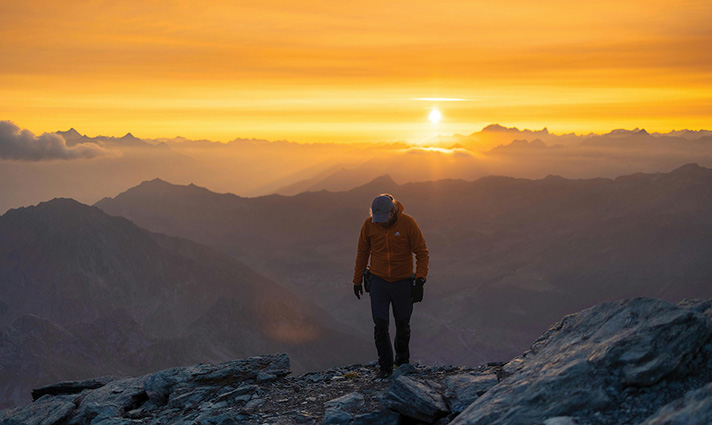
“Who will monitor the consequences of climate change? The inhabitants of the mountains can be caught off guard, but they have an unteachable understanding of their territory, and the small, consequential ways in which it is changing. Rather than abandon the landscape, it may be time to engage with it more than ever.” (Adapted from an editorial in The Guardian.)
The time we spend on our walkabouts niggles our awareness, as we drink in the landscape, noticing nuances of daily shifts in our surroundings. Sun’s rays tickled the bark of the trailside tree just a bit to the left of where it rested yesterday. The flow in the trailside creek is not quite as high on that strangely colored boulder as it so recently was. Poison Oak leaves seem to have lost more of their vibrant green, becoming red, pink, then ghostly white skeletons. Where yesterday a deer’s hoofprint disturbed the dust, today we saw a fox track. And we’re quite certain that the seedpod on the milkweed was subtle pink blossoms just last week.
Our world has always been a dynamic backdrop to our activities. Cultural wisdom reminds us that our only universal constant is change. In our solitary wanderings through our surrounding landscapes, undisturbed by conversations, and unplugged from a bombardment of media stimuli, we are able to reset our senses. Our footfalls may carry us into new and unfamiliar territory, but our cognizant selves will forever filter new inputs into the tapestry that is our own awareness.
It’s with this in mind that we peruse the above quote. We, who travel the trails and tracks of our surrounding hills and valleys, have an opportunity to not be “caught off guard” as change comes to our world. We can notice the subtle shifts. It is we, the travelers, who possess an understanding of our territory, who will notice the small, but perhaps consequential, changes. And we do have a voice to speak out. Let’s engage with our landscapes; let’s be out and about.
It was a recent trip into Sky Lakes Wilderness that reminded us of how a landscape can appear so unchanged in fifty years. Yet we’re aware of the changes. The forest has swallowed the former cow trails used to move cattle from winter to summer rangeland. Long distance hikers move through on the Pacific Crest Trail, its predecessor, Oregon Skyline Trail, now in many places but a few random blazes on trees. What would Judge John Waldo, who helped blaze that trail over a century ago, think of the changes in the Sky Lakes area? Would he see “the consequences of climate change?”
Forest Park News—The free Avenza download of the 4th edition map is available—QR codes at park kiosks. Long distance mountain bike riders (no E-bikes) can now do a massive loop: start at P2, up Rail, Halls of Manzanita and Steep Canyon Rangers to Canyon Vista, across to Jackson Ridge and Claimjumper, across Atsahu to Twin Peaks Saddle and the new trail down to Owl Hoot, Boulder, and P2.
 Trail Talk is a monthly column by Clayton Gillette about hiking the Jacksonville Woodlands trail system. For more information, please visit the Jacksonville Woodlands Association website at