
On Real Estate & More – August 2025
THE PROTECTION of historic buildings is important to save history for future generations. Experiencing a space where history happened is crucial for fostering the shared connection that builds a stronger community.
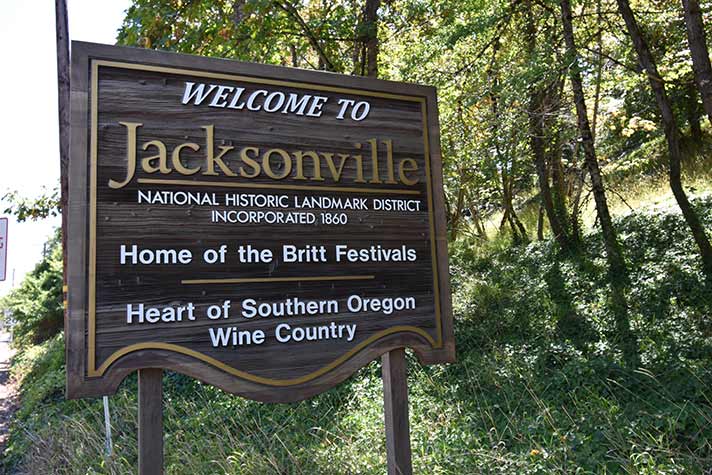
Jacksonville is one of the best-preserved historic towns on the West Coast, designated as a National Historic Landmark District in 1966. Its architectural heritage has been protected through a combination of federal, state, and local incentives that encourage preservation-sensitive rehabilitation and maintenance, as well a community engaged in preserving their local heritage.
The economic impact of preservation is challenging. Restoring old buildings often costs more than new construction; however, there are grants and tax incentives available for owners with historic properties. These include the following:
Federal Tax Incentives—Jacksonville’s historic buildings, either individually listed or as contributing properties within the historic district, can benefit from the Federal Historic Preservation Tax Incentives program. This incentive offers a 20% investment tax credit for the rehabilitation of income-producing historic properties. The work must meet the Secretary of the Interior’s Standards to qualify. A 10% credit may be available for older buildings (built before 1936) that do not qualify for the full 20% credit.
This tax credit can substantially reduce the upfront financial burden on building owners and developers, making preservation work more economically feasible.
Oregon State Special Assessment Program—Oregon’s Special Assessment of Historic Property Program, established in 1975, is the nation’s first state-level historic preservation incentive. It allows qualifying properties to freeze their assessed property value for 10 years. This stabilization is most useful before major renovations are completed, as it offsets potential increases in property taxes triggered by property improvements.
To participate, a property must be listed in the National Register, either individually or as a contributing structure in a district—or be recognized as historic by the State Historic Preservation Office. A preservation plan detailing intended rehabilitation work is required, with a minimum investment equal to 10% of the property’s assessed value over the first five years.
Jacksonville Historic Preservation Fund—At the local level, Jacksonville operates the Historic Preservation Fund, supported by private donations. This program provides matching grants to owners or lessees of landmark listed contributing historic structures in the city. The applicant must pay the full cost upfront; upon project completion, submission of receipts, and inspection, the city reimburses 50% of approved expenses, up to the annual funding cap.
Mandatory criteria include:
- Property must be on Jacksonville’s Landmark List as a Contributing Historic Resource
- Work generally restricted to exterior treatments, unless structural improvements are justified
- Compliance with the Secretary of the Interior’s Standards
- Submission of a full set of documentation (narrative, budgets, contractor bids, photos, ownership proof)
- Planning approvals such as a Certificate of Appropriateness may still be required
Additional State and Local Support Options:
Code Relief and Permit Incentives—Oregon’s building code includes provisions for waiving or relaxing certain code requirements for historic structures (e.g., parking, use, safety), which helps lower rehabilitation costs. Jurisdictions are also encouraged to offer expedited permitting and reduced fees for historic projects
State Grants and Revolving Loans—The SHPO may offer Preserving Oregon grants when funding is available; communities may also establish revolving loan programs or direct improvement grants to assist maintenance, façade restoration, or energy upgrades
Development Incentives and Urban Renewal—Tools like Transfer of Development Rights or inclusion in Urban Renewal Districts can channel public funding into historic areas and make preservation more economically viable
Local and Community Partnership—Jacksonville’s Historic Preservation Commission, oversees Certificates of Appropriateness, landmark designations, and public outreach. The nonprofit Historic Jacksonville, Inc., organizes educational programs, tours, and events that raise awareness and support for preservation.
Jacksonville benefits from a framework of incentives—federal tax credits, a 10-year state assessment freeze, local matching grants, and various regulatory and financial supports. Combined with an active local commission and nonprofit advocacy, these tools help ensure that preservation can be financially practical. For property owners with questions about these programs, reach out to the appropriate governing body for additional information.
 Sandy J. Brown lives in Jacksonville and is a real estate broker and land use planner with Windermere Van Vleet Jacksonville. She can be reached at sandyjbrown@windermere.com or 831-588-8204.